International schools are highly dependent on reaching out to parents with children at pre-schools. This will be even more important in the next year or two due to the economic fallout from COVID 19, expected to reduce foreign direct investment and with fewer expatriates transferring to overseas markets.
That said, expatriate children usually make up the majority of international school places, and many families already located overseas hope to ride out the current storm, probably on reduced salaries.
The natural expatriate lifecycle means that most school enrolments happen in Primary years, often with children previously at pre-schools in the same market. Based on Novema’s New Parent Survey, 71% of those enrolling children at an international school were for Primary years (e.g. children 5-11 years old), 37% for Middle School (e.g. 11-16 years), and only 9% for High School (e.g. 16-18 years).
Expatriates are typically located overseas in their 30s and 40s, e.g. at middle to senior management levels, and this often means being located overseas when they are single, as pre-family couples, or with young children.
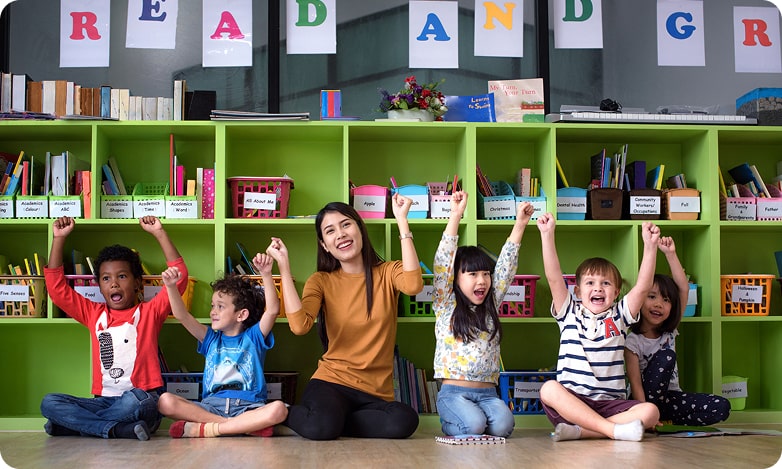
The options for pre-schooling are huge – for example in Singapore there are an estimated 1,800 pre-schools, offering a wide range of early learning and enrichment options. Expatriates sometimes choose local pre-schools for value-for-money and to give their children the opportunity to mix with local children, but then most go on to international schools as the child moves to Primary school years.
Pre-schools represent a natural ‘feeder market’ to international schools. In order to ‘capture’ the pre-school feeder market, some international schools set up their own pre-school sections, e.g. catering for 3-5 year olds.
Many international schools are on large campuses with thousands of students – this can be quite intimidating for young children. Consequently, the international schools choose to locate their pre-schools at different sites, or use clever architectural designs to make their pre-school sections look smaller and well separated from the main school.
For such young children, ‘play based’ and ‘discovery-based learning’ is appealing, and for non-English speaking expats language support is particularly important, and these are the optimum years for children to learn multiple languages.
Based on Novema’s annual survey of international schools, parents often have children both a pre-school, and with older child already enrolled in an international school. Clearly, the experience of the school where their child is already attending can determine whether the younger child follows in their older sibling’s footsteps.

The convenience of having children at the same school is one consideration, but parents are very proactive in choosing schools and will consider a wide range for different children. International schools sometimes provide discounts for multiple children, but this is usually for three or more children, but only 5% of parents with children at international schools have more than two children making this benefit quite limited.
From the Novema survey results, we looked at how pre-school parents differ to parents already enrolled in international schools. The pre-school parents in the survey included those with the intention of enrolling their child at an international school after their pre-school.
Based on the Novema survey, the criteria used by pre-school parents to choose international schools are a somewhat different to the rest. Firstly, there is more demand for International Baccalaureate Primary Year Programs (IB PYP), more so than parents with children already in Primary years. This also reflects their preference for more ‘discovery-based’ learning over more structured learning.
There is more demand among pre-school parents for Chinese language to be taught at school, demonstrating how parents are keen to get their young children learning at the optimum years for language development, and also for those languages deemed to be more difficult to learn. Japanese is also in higher demand among pre-school parents.
Despite not yet having enrolled a child at international schools, pre-school parents are equally aware of the range of schools in the market as compared to those already in the system. They are also equally aware of the advertising from these schools, particularly so through social media.
But they are less aware of the ‘budget international schools’, e.g. those offering international curricular, but with more basic facilities and with significantly lower fees. Yet pre-school parents are also more inclined to consider lower cost international schools, probably because they do not see the need for all the facilities and ECAs associated with the more expensive mainstream schools.
Hence the budget schools could be missing opportunities in attracting new parents to which their value proposition for primary years could be quite compelling, and even more so in the more challenging economic environment that we are all heading into.
Article written by Piers Lee, Managing Director of Novema Pte Ltd. Contact: info@novema-research.com